RotoGrinders Daily Fantasy
4.7 908.00 Reviews
Analysis By AppCompare
I use fantasy sports tools when a slate is close to starting and I need dependable lineup information without jumping between team pages, news feeds, and social posts. RotoGrinders Daily Fantasy is built for that particular moment: keeping an eye on starting rosters while you prepare contests. It is a free sports app from RotoGrinders, aimed at mature users, and its value depends less on entertainment than on how quickly it helps you react to late lineup news.
My first impression is that this is a specialist utility rather than a complete fantasy-sports platform. It does not replace the contest site where you enter a lineup, and I would not treat it as a general sports news reader. Its job is narrower and, for the right user, more useful: give daily fantasy players a focused place to monitor roster changes before making decisions. The app is most helpful when timing matters more than browsing.
How the current app fits into a daily fantasy routine
The current release is version 3.0.3, and the app has been available since September 11, 2015. That long presence matters because a roster-tracking tool needs to fit an established habit: open it before a contest locks, check the latest information, then return to the fantasy platform to make adjustments. I see it as a companion screen, not as the center of the entire fantasy workflow.
RotoGrinders has positioned the app around starting lineups, which makes the intended audience fairly clear. If you play daily fantasy contests and routinely ask whether a player is actually starting, this focus can save time. If you mainly follow teams for scores, standings, or broad news, the experience may feel too narrow. The app makes more sense for someone who already understands fantasy contests and wants a practical way to reduce uncertainty before submitting a lineup.
On Android, the stated minimum operating-system requirement is Android 5.0. That makes the compatibility range approachable for people using older devices, although the experience on a modern phone will naturally depend on the device, connection, and the amount of activity around a slate. I would still keep the fantasy contest app open separately, because this tool is designed to inform a decision rather than complete the entire transaction.
The app is free to install, but it includes in-app purchases ranging from $9.99 to $119.99 per item. That changes how I would evaluate it. A casual player can try the basic experience without paying upfront, while a serious user should examine which parts of the workflow require an upgrade before building a routine around them. The free entry point is convenient, but “free” does not necessarily mean every useful capability is included.
What I would use it for before a contest
My preferred use is a short pre-lock check. I would open the app after building a rough lineup, look for confirmed starting information, and then compare that information with the players I am considering. This is more disciplined than constantly refreshing several team pages. It also helps separate a player who is merely listed on a roster from one who is expected to be in the starting group.
A realistic evening scenario is a basketball slate that begins while I am commuting home. I might have already selected a few players, but a late scratch or a changed starting group could affect the value of those choices. Rather than relying on an old article or a message sent earlier in the day, I would use the app as a final checkpoint, then make the actual edit on the contest platform. That two-step process is important: this app supports the decision, but it is not a substitute for checking the final lineup in the place where the contest is entered.
For baseball users, the same habit can be useful because starting lineups can influence whether a player receives an opportunity at all. The practical benefit is not simply seeing names in a list. It is being able to connect late roster information with the lineup you have already built, especially when you are managing several contests and do not want to repeat the same manual search for every player.
Why a focused roster tool can beat ordinary sports apps
A conventional sports app usually tries to cover scores, schedules, team news, standings, alerts, and general fan content. That breadth is useful when I want to follow a league, but it can bury the one detail I need before a fantasy deadline. RotoGrinders Daily Fantasy takes the opposite approach. Its appeal comes from reducing the search area around starting-roster information.
Compared with a browser search, the advantage is consistency. Search results may lead to old previews, unofficial speculation, or pages that require several taps before reaching the relevant lineup. Compared with a team-specific app, the advantage is that a fantasy player can think in terms of a contest slate rather than one favorite club. Compared with a social feed, the advantage is less noise; social posts can be fast, but they also mix confirmed news with guesses and reactions.
That focus is also the main trade-off. A broad sports app may give me context that helps evaluate a player, such as recent performance or a schedule view, while this specialist app is more useful for the roster question itself. I would not uninstall every other sports tool because of it. I would use this one when the cost of missing a starting-status update is higher than the cost of opening another app.
Small workflow choices that make it more useful
One useful habit is to check the app twice rather than only once. The first check helps identify questionable players while I am constructing a lineup. The second should happen close to contest lock, because information can change after the initial research session. This is a better use of a lineup tracker than treating the first morning check as permanent confirmation.
I also recommend keeping a simple distinction between “starting” and “worth selecting.” A confirmed starter is not automatically a good fantasy play. The app can help with availability and role-related uncertainty, but I would still consider salary, matchup, contest format, and the rest of the slate elsewhere. This prevents a common mistake: turning a roster update into an automatic lineup decision.
A third practical tip is to use it as a verification layer when managing multiple contests. I might have one conservative lineup and one more experimental lineup, but both can be damaged by the same late scratch. Checking the relevant starters before submission lets me correct shared risks first, instead of spending time fine-tuning players who may not even take part.
Finally, I would avoid assuming that an app screen is a guarantee of future availability. Starting information is time-sensitive by nature. The safest workflow is to check close to the deadline, confirm the player inside the contest platform if possible, and avoid making a major decision from an old notification or an earlier session. That is not a criticism unique to this app; it is the basic reality of daily fantasy.
What has changed, and what that means for existing users
The move to version 3.0.3 suggests that this is not an abandoned experiment but an established product that has continued through multiple iterations. I can confidently treat the current version as the one to evaluate today, rather than assuming the interface or behavior from its original launch remains unchanged. At the same time, a version number by itself does not tell me that every desired feature has been added, so I would judge the app by the roster workflow it currently provides.
For an existing user, the most important question is whether the updated release still supports the familiar pre-contest routine. If you already rely on the app, I would pay attention to how quickly you can reach the relevant slate, whether the presentation remains easy to scan, and whether the information arrives in time to act on it. A change that looks minor in a version update can matter greatly when you are checking several players under a short deadline.
The app’s age also gives it a different context from a newly launched fantasy tool. It has had time to become recognizable among its intended audience, reflected in an average rating of 4.7 from around 3.4 thousand ratings. That is encouraging, but I would not treat the rating as proof that it suits every fantasy player. A high average can coexist with a poor fit for users who want research, contest entry, or broad sports coverage in one place.
Its reach is also meaningful without making it a universal service. The app has passed 50 thousand installs, which indicates that it has found a real audience for this focused use case. I read that as evidence of relevance rather than a promise of perfection. A specialist tool can serve a smaller group extremely well while still leaving casual sports fans unconvinced.
The mature age classification is worth taking seriously. Daily fantasy involves contest decisions and, for some users, paid participation, so I would not present this as a child-oriented sports app. Parents should not assume that a sports label makes it appropriate for younger users. Adults should also approach the in-app purchase options carefully and decide whether the additional cost fits the frequency with which they actually play.
Where the app still has practical limits
The first limitation is scope. RotoGrinders Daily Fantasy is not the right choice if I want a complete research dashboard with every piece of analysis in one place. I may still need a contest platform, a statistics source, and league-specific news. That can create a multi-app workflow, and users who prefer simplicity may find the extra switching frustrating.
The second limitation is that speed only helps if I have time to act. A starting-roster update that appears after I have submitted a contest cannot undo the decision. I would therefore avoid using the app as a background reassurance tool. Its value is highest when I build a deliberate check into my schedule, not when I open it randomly and assume I am covered.
The third limitation concerns payment expectations. Because the app is free with in-app purchases, I would not assume that the free experience includes every advanced option a frequent player might want. Before paying for anything, I would test the basic workflow across the sports and contest situations I actually use. Someone who plays only occasionally may find that the free portion is enough, while a high-volume player may see more value in paid tools, depending on what is available in the current release.
There is also a human limitation: no lineup tool replaces judgment. A confirmed starter can have a reduced role, a difficult matchup, or a price that makes the selection unattractive. The app can reduce one kind of uncertainty, but it cannot turn incomplete sports information into a guaranteed result. I appreciate it more when I treat it as a filter for avoidable mistakes rather than as a prediction engine.
Who should install it, and who should skip it
I would recommend trying it if you play daily fantasy often enough that late starting information affects your lineups. It is especially suitable for users who already have a contest routine and want one focused place to check roster status before lock. It can also help people who follow several leagues and dislike opening individual team pages just to answer the same starting-lineup question.
I would be more cautious if you are new to fantasy sports. The app may answer an important question, but it does not necessarily teach you how to build a lineup, compare contest types, manage a budget, or interpret player value. A beginner may get more from a broader educational or statistics-focused resource first, then add this app once roster news becomes a regular part of the process.
I would also skip it if your main goal is ordinary sports fandom. If you want live scores, video, standings, historical information, or a rich team-following experience, a mainstream league or team app is probably a better match. This is a specialist companion for fantasy decisions, not a replacement for every sports service on a phone.
Frequent players should consider the cost with a clear rule: do not pay simply because an upgrade exists. First identify the exact problem you need solved, such as reducing repeated searches or improving your late lineup check, and then decide whether the paid option addresses that problem often enough to justify it. The wide range of available purchase prices makes this especially important for users who play at different levels of commitment.
What I would watch in future updates
For future releases, I would watch how the app handles the tension between speed and detail. The best version of this tool should remain quick to scan while giving enough context to distinguish a confirmed starter from a player who is merely expected to appear. More information is not automatically better if it slows down the final pre-lock check.
I would also look for improvements that reduce the need to move between screens and services. The app does not need to become a full fantasy platform, but anything that makes it easier to connect roster news with an existing lineup would strengthen its role. The key is preserving its narrow purpose instead of adding unrelated sports content that creates more clutter.
Existing users should watch whether updates improve their actual routine rather than focusing only on a new version label. Ask yourself whether you can find the relevant slate faster, whether late changes are easier to notice, and whether the app still feels dependable during the short period before contests begin. Those are the measures that matter more than cosmetic changes.
My final view is positive but specific. RotoGrinders Daily Fantasy earns its place as a focused roster-checking companion for serious daily fantasy players. It is free to start, has a strong average rating, and comes from RotoGrinders, a developer associated with this particular fantasy-sports audience. I would recommend it to someone who understands its boundaries and wants a cleaner way to monitor starting information.
I would not recommend treating it as a complete research suite or as a guarantee against bad fantasy decisions. The best results come from pairing it with careful analysis and a final check on the contest platform. If that sounds like your routine, this is a practical app to keep ready when lineup news becomes decisive. If you only want general sports coverage, the narrower focus will probably feel like a limitation rather than an advantage.
FAQ
What is RotoGrinders Daily Fantasy?
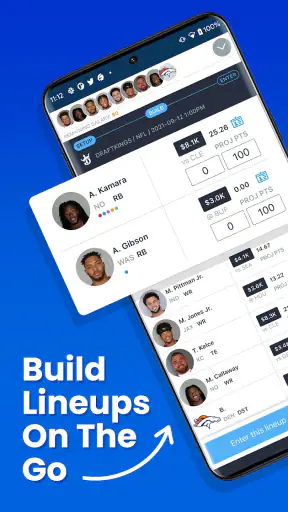
RotoGrinders Daily Fantasy is a companion app and information platform for players who participate in daily fantasy sports. It typically provides access to player projections, lineup advice, contest strategy, rankings, tools, and sports news designed to support research before entering contests. It is not the same as a sportsbook, and the exact features available may depend on your region, supported sports, and connected fantasy platforms.
Can I enter daily fantasy contests directly through the app?
The app’s primary purpose is generally research, analysis, and lineup preparation rather than acting as a universal contest-entry platform. Depending on the version and your location, it may connect you with supported daily fantasy operators or direct you to their websites and applications. Before downloading, check the current store description and verify whether contest registration, account linking, and real-money play are available where you live.
Does RotoGrinders Daily Fantasy cost money to use?
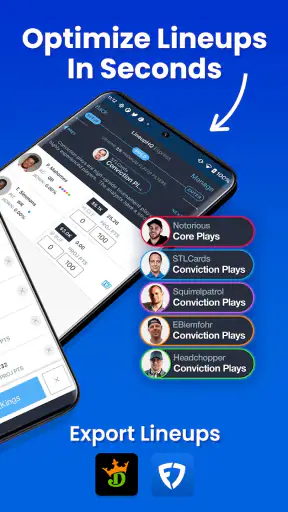
Some RotoGrinders content and tools may be available for free, while advanced projections, premium articles, lineup builders, optimizer features, or expert content can require a subscription or separate purchase. Pricing and included benefits may change over time. Review the current membership terms carefully, including renewal conditions, trial periods, cancellation instructions, and whether purchases are handled through Apple or Google.
Which sports and fantasy platforms are supported?
Coverage can vary by season and by the services integrated into the application. RotoGrinders has traditionally focused on popular fantasy sports such as football, basketball, baseball, hockey, golf, and other major competitions, but not every sport or contest format is guaranteed. Supported operators, slates, statistics, and tools may also differ between countries, so confirm compatibility before relying on the app.
Is RotoGrinders Daily Fantasy suitable for beginners?
Beginners can use the app to learn about player research, contest selection, projections, bankroll management, and lineup construction, although the amount of information may feel overwhelming at first. Its recommendations are not guarantees of winning, and daily fantasy involves financial risk. New users should start with free contests or very small entries, understand local regulations, and make independent decisions rather than following projections blindly.
Pros
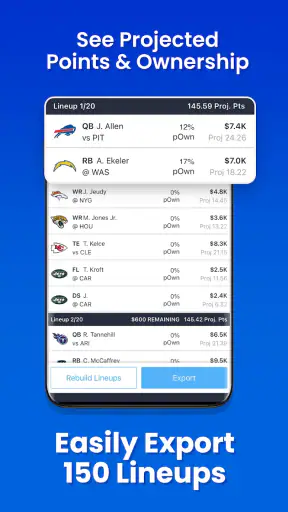
- Detailed projections and rankings help prioritize daily fantasy picks.
- Covers multiple major fantasy sports contests in one app.
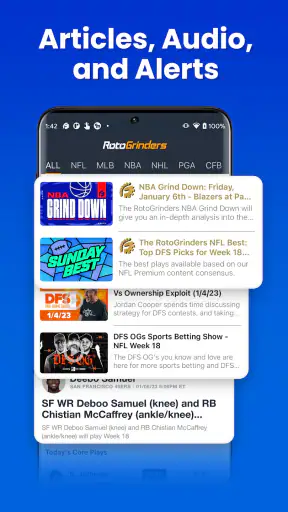
- Contest alerts make it easier to track important slates and deadlines.
- Research tools can reduce time spent comparing players manually.
- Useful for both beginners and experienced DFS players seeking an edge.
Cons
- Many advanced tools may require a paid subscription.
- The amount of data can feel overwhelming for first-time DFS users.
- Advice depends on current information and may change close to lock.
- Some features may be limited by sport
- contest type
- or region.
- Results are not guaranteed
- so subscription costs can outweigh winnings.